News & Insights
The Future of Agentic Shopping: Four Key Learnings Every Product Leader Should Know
June 23, 2025
By Molly Lussier
In the new era of e-commerce, we now know that AI agents will operate semi-autonomously alongside users, helping to streamline and personalize the shopping journey.
The impact? From the perspective of a longtime SEO leader working with brands, I’m advising our clients about the importance of this shift: how people shop from traditional keyword-based searches to more conversational, context-aware interactions, including how we shop.
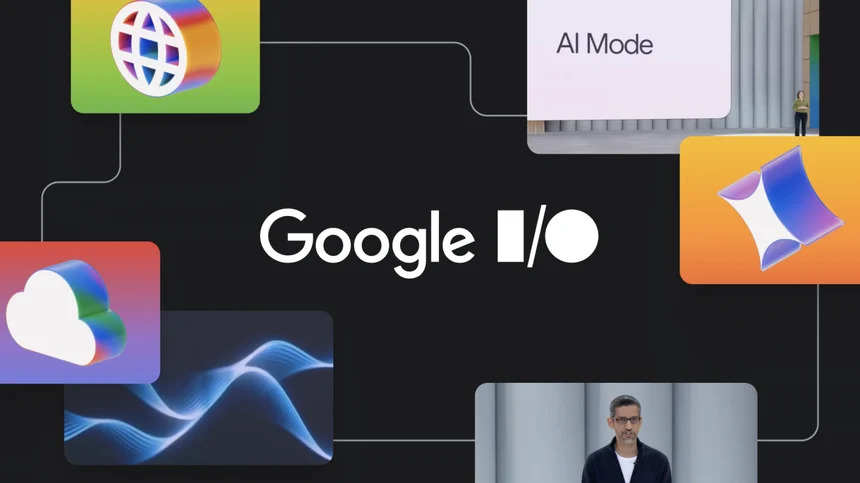
The recent Google I/O conference alone pointed to key themes taking shape. Here we dive into four of these key topics that brand leaders should know to help their teams get organized ahead of the agentic shopping wave.
1. The shopping journey is becoming seamless and autonomous
AI is streamlining the entire shopping journey, making it more intuitive and efficient through agentic purchasing, virtual try on, and more deeply integrated shopping features such as product buying guides, trending products, and curated looks.
While Google wasn’t the first to introduce AI-powered shopping, AI mode, highlighted at Google I/O, comes closest to delivering a fully-automated, hassle-free purchasing journey. By meeting complex user needs and seamlessly connecting product discovery with checkout, Google aims to set a new standard for AI-assisted purchasing experiences.
For brands, it will become increasingly important to ensure your products are included in Google’s Shopping Graph, the data set that leverages over 50 billion product listings updated hourly to power AI mode, simplify the shopping process, and deliver real-time product insights at every stage of the buyer’s journey. Surfacing in personalized AI Mode recommendations requires uploading accurate, up-to-date product feeds to Google Merchant Center and optimizing your e-commerce websites with structured data for search engine and AI crawler accessibility. This dual approach helps make your offerings discoverable and eligible for the full range of AI-powered shopping features, positioning your brand at the forefront of the next generation of automated, intelligent commerce.
However, as AI-powered shopping tools rise in power, they risk reducing traffic to small and medium-sized publishers, particularly for upper-funnel content such as product guides. Unless stricter regulations are introduced to govern how AI platforms access and use third-party content, this trend is likely to continue. While organic search remains an important channel for brand visibility and driving users to conversion, its ability to drive traffic for early-stage purchase research is currently declining. To maintain reach and engagement, brands will need to diversify their channel investments for upper-funnel content by leveraging paid media, email, social media, and digital PR. Additionally, building strong brand recognition and generating positive online mentions is crucial, as AI experiences increasingly prioritize well-known brands as trusted sources and can further amplify brand awareness through frequent citations in generated answers.
2. Online shopping is becoming more immersive and interactive
AI platforms aim to create a shopping experience that is fast, frictionless, and sparks delight. For retailers, the benefits are multiple: bringing more elements of the in-store experience online helps reduce hesitation, boost shopper confidence, increase conversion, and lower return-associated costs.
For example, Google’s new virtual dressing room allows users to upload a photo and “try on” billions of styles from its Shopping Graph, powered by a new custom image model that understands how different materials will naturally fall on different bodies. Users can even share looks with friends for a second opinion.
AI platforms hope to empower users to make smarter choices and have more fun along the way. As third-party shopping platforms up their engagement, brands need to ask themselves how might their digital products meet this same standard—or even exceed it? Offering exclusive, immersive digital experiences will become a non-negotiable for driving traffic, direct sales, and even lowering costs by reducing product returns.
3. Personalization is being redefined and integrated across the e-commerce ecosystem
In this new shopping frontier, AI-driven platforms are going beyond personalization as we know it by dynamically interpreting real-time conversations, nuanced intent, and situational context—delivering recommendations that adapt fluidly to each user’s evolving needs, not just their browsing history or clicks.
Google’s AI Mode leverages ongoing dialogues, cross-device activity, and real-world context like location and time of day to provide truly individualized shopping recommendations that anticipate and respond to each user’s current mindset. Users will be able to opt in to connect to other Google apps to give the AI even more context for results personalization. Perplexity and OpenAI also personalize their shopping recommendations by leveraging user interactions, real-time data, and platform integrations to deliver tailored results. Perplexity has integrated with Shopify to help the AI surface the most relevant products for each user, while OpenAI and Anthropic are partnering with Visa to enable recommendations that can align with users’ purchasing patterns, if they opt in.
These examples prove that it’s not just what happens outside your brand channels that matters—brands must also pay close attention to how integrated commerce platforms and payment processors are shaping the AI-powered shopping experience. Partnerships with platforms like Shopify and Visa are evidence that the entire commerce ecosystem is rapidly evolving to deliver seamless, personalized journeys both within and beyond your own digital storefronts.
Concerns about data privacy and evolving international regulations may limit how fully users are willing or able to opt into personalization across AI shopping experiences. However, brands that are able to dynamically meet user needs in real-time will be a step ahead as personalization is quickly becoming amplified by AI across the shopping experience.
4. Trust and transparency will become the foundations of AI Commerce
Importantly, Google and other AI shopping platforms are prioritizing security and trust, ensuring the safety of payment processing and up-to-date product information. Google leverages Google Pay’s secure authentication and always confirms purchases with users before completing a transaction, while sourcing product data from its constantly updated Merchant Center and live web feeds. Perplexity’s Shopify integration and its own Merchant Program provide real-time, reliable product details directly from retailers. Meanwhile, OpenAI and partners such as Visa enhance security with tokenized digital credentials and allow users to set spending limits for AI-driven transactions.
With AI agents doing the shopping legwork, but shoppers making the final purchase decision, UX designers will need to be ever more mindful of including clear prompts, confirmation screens, and even ‘undo’ options for users who breeze from effortless AI-enabled discovery to purchase. Agents aren’t shopping for users, they’re shopping with users. Designers and strategists will need to fully integrate these new AI agents alongside traditional user personas, considering their capabilities and limitations when shaping the products and platforms agents will interact with.
A new era: what AI shopping signals for ecommerce
AI search is transforming the landscape of online shopping, ushering in a new era where the process is faster, more intuitive, and increasingly autonomous. The shift from traditional, research-heavy ecommerce to a seamless, engaging, and efficient AI-driven experience will not only make product discovery easier and (hopefully) more enjoyable but also fundamentally change how consumers of all ages approach online shopping.
Businesses should anticipate these upcoming changes in online user behavior and reassess whether their existing ecommerce content aligns with these new pillars of AI-driven shopping experiences. To maximize brand online visibility, it will also be paramount to evaluate whether the structure, depth and experience of ecommerce content lends itself to being promoted in these emerging AI shopping platforms.
About the author
Molly Lussier is an Associate Director of SEO Strategy at Work & Co, bringing over a decade of experience optimizing digital experiences to be user-centric while enhancing visibility and engagement. She helps teams align online brand experiences with user intent and leverage the latest advancements in search to effectively reach target audiences.
Stay informed
Get occasional updates about our digital products, news, and events.