News & Insights
Five Questions with Design Leader Dever Thomas
August 27, 2026
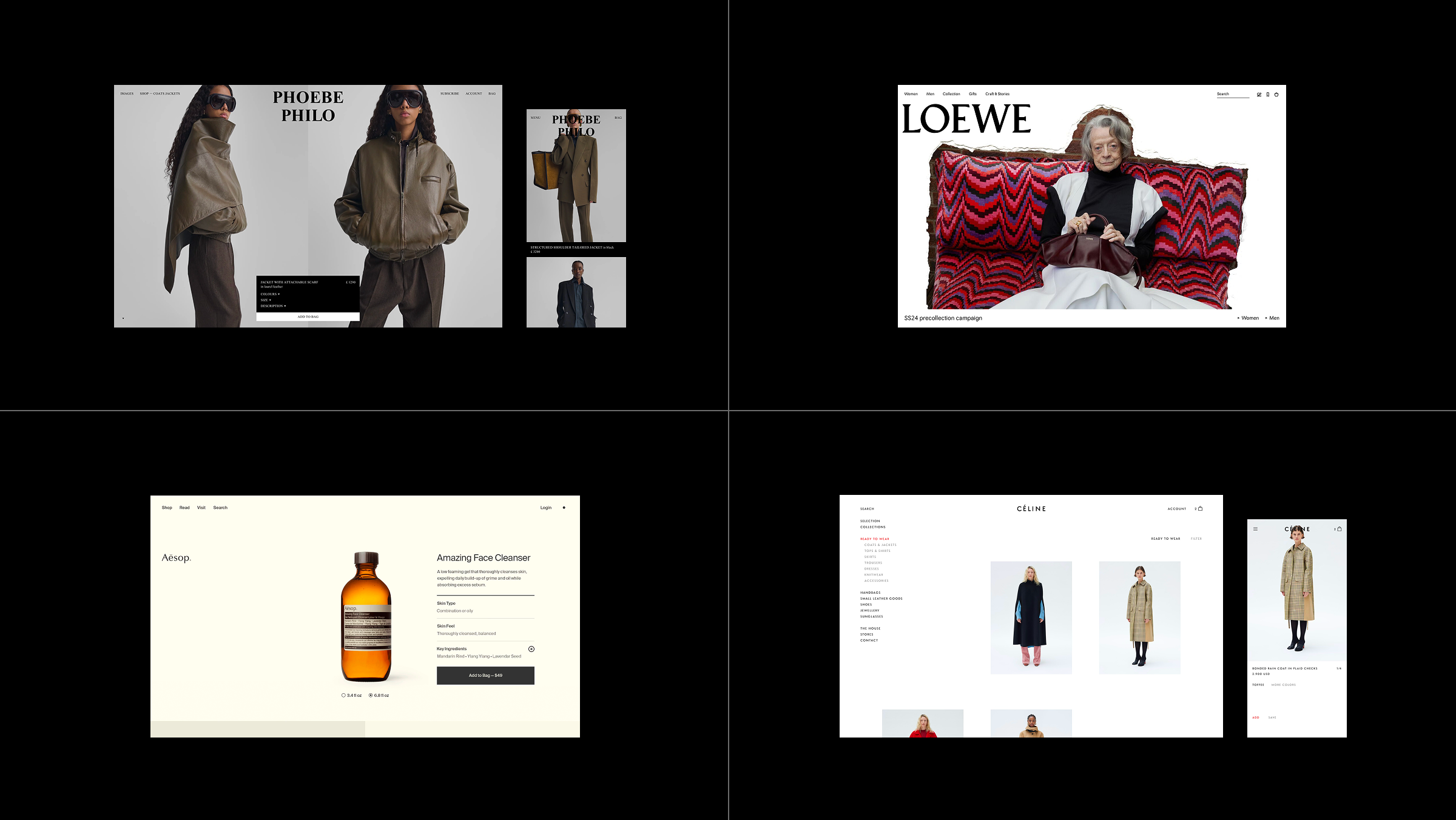
For more than a decade, Work & Co Design Leader Dever Thomas has worked with some of the world’s most distinctive luxury brands, including LOEWE, Céline, La Mer, Phoebe Philo, and Aesop. Across that work, she’s found that designing for luxury is an exercise in editing as much as invention. The same considerations that shape any digital product — business goals, user needs, technology, operations, best practices — have to be understood through the point of view of the brand.
That specificity is increasingly important as new technologies make it easier to create more, faster. We spoke with Dever about the design problems luxury still hasn’t solved, what separates premium experiences from those that simply imitate them, and how brands can evolve without losing what made them distinctive in the first place.
Work & Co
Where do you think the most interesting design problems in luxury are right now — the ones that haven’t been solved yet?
Dever Thomas
Luxury shopping online is still often organized like a catalog, with products divided into familiar categories and presented through fairly standardized structures. Brands are certainly bringing curation and visual merchandising into those experiences, but the fundamental way we browse and discover product hasn’t changed all that much. At some point, there’s going to be some new way of shopping that moves beyond this traditional model of browsing — experiences that understand intent, compare products intelligently, connect product to culture, and bring more personal service into the journey.
Personalization has been talked about in digital for years, but I don’t think many brands have delivered on its potential in a particularly meaningful way. What’s exciting now is that the capabilities are finally starting to catch up with the ambition. For luxury, I don’t think that means giving customers endless choice or diluting the brand’s point of view. It’s about understanding the individual well enough to make that point of view more relevant to them — much in the way the best client advisors do. They understand the client and tailor their advice accordingly, while still representing the perspective and expertise of the brand. There’s an opportunity for digital to bring more of that intelligence into the experience, whether that’s through what someone is shown, the services they’re offered, or how their digital and physical relationship with the brand connects.
Work & Co
What separates a truly premium digital experience from one that simply looks luxurious?
Dever Thomas
I don’t think any great brand has been made by imitating something else. Luxury is not an aesthetic. Restraint might be part of its visual language, but a truly premium experience is about form and function being held to the same standard. The full expression of the brand — imagery, content, tone of voice, typography, color, pacing, digital visual merchandising, and the way products are framed — is what creates desire. But that same level of consideration has to extend to how the experience actually works: performance, product information, size and fit guidance, styling advice, shipping, returns, and client services. That’s what creates confidence. For example, how easy is it to get on the phone with a client advisor when you want to speak to a human? It’s not enough for an experience to look elevated. It has to deliver across the board, in less expected moments, and essentially at every point where the customer is making a decision.
Work & Co
How do you modernize iconic brands without losing what makes them distinctive?
Dever Thomas
Modernization can’t just mean optimization. When the focus is primarily on commercial goals — improving conversion, streamlining the funnel, increasing the volume of content — there’s a risk of optimizing away the very things that make a brand distinctive. For luxury especially, everything can become too transactional. You can end up with something that’s performant but ultimately anonymous. For iconic brands, it’s often the personality, eccentricity, or even moments of friction that made them matter in the first place. Those codes show up across the full world of the brand — in the clothing, the stores, the campaigns, the cultural events — and those same qualities should behave in digital systems.
That might mean navigation, merchandising, motion, content, service, or the way a product is presented. The goal isn’t simply to make the experience more efficient or conventional, but to make it feel current while remaining unmistakably its own. Best practices still matter, but they have to be interpreted through the lens of the brand’s codes.
AI adds another dimension to that risk. Digital experiences can start to converge on the same visual logic when they’re pulling from the same references. The brands that stay distinctive will be the ones that treat their digital codes with the same rigor they apply everywhere else.
Work & Co
Every era of luxury digital design has produced its signature gesture — the full-bleed campaign film intro, the slow scroll reveal, the editorial-over-commerce structure. What’s the gesture that defines this moment, and is anyone doing the work to retire it yet?
Dever Thomas
One of the most interesting shifts is happening in e-commerce imagery. For decades, product imagery has been highly standardized — flat lays and almost robotic model photography, designed to make it easy to compare products across a catalog. But those conventions are starting to break down as the boundaries between commerce and other forms of brand content become less rigid. That creates a real creative opportunity for brands to rethink how product imagery can express their identity, how best to showcase the product itself, and connect to how product is merchandised in-store.
That’s something we explored in different ways with JW Anderson and LOEWE: how digital can carry the brand’s codes while still being shoppable. With JW Anderson, the imagery could carry the character and eccentricity of the brand through a mix of video, photography, and overall style. With LOEWE, a lot of the work was about creating consistency between how product is merchandised in-store and online, so the digital experience felt as distinctive and considered as the physical one.
With AI, brands will be able to produce imagery at a scale and with a level of creative variation that simply wasn’t possible before, opening up entirely new ways to present and merchandise product. But scale isn’t interesting on its own. What’s exciting is that brands will be far less constrained by the time, cost, and complexity of producing imagery, creating space for ideas that previously wouldn’t have been possible. The challenge is to use that freedom creatively, while ensuring the work still feels authored and driven by a clear point of view.
Work & Co
Luxury has historically been seen as cautious about digital transformation. Has that narrative changed? What do you think the industry is getting right — and innovating around earlier than other sectors?
Dever Thomas
Luxury has rarely been a first mover in technology, and I think that’s for good reason. These brands already have incredibly distinctive experiences, built around product, service, physical environments, and human relationships. There’s good reason to be thoughtful and deliberate about introducing something new. Whether it’s beauty, apparel, automotive, or travel, the question for luxury should always be whether technology has a real purpose and strengthens the brand and customer relationship.
I think that mindset becomes even more valuable as AI develops. As digital experiences become easier to create and automate, the things that can’t be easily replicated — physical experiences, expertise, personal relationships — become more valuable. Luxury already understands the power of those things. At its best, technology isn’t there to replace the store or the client advisor, but to make those experiences work better together and extend the relationship beyond a single interaction.
So I’m not sure luxury needs to be the industry adopting technology earliest. What it gets right is being selective about where technology belongs and what it can meaningfully add. In the next few years, I think that discipline is going to become increasingly important.
Stay informed
Get occasional updates about our digital products, news, and events.